Thursday, 12 March 2015

FINALLY saw a Pink-eared Duck! March 2015

I've been hoping to come across a Pink-eared Duck for ages now and it's frustrating to see that other birders have seen them in places I regularly visit. But today I finally saw a pair of them at Mill Park Lakes.

They are interesting looking birds with a massive square-tipped bill, zebra stripes and a cute little patch of pink feathers behind the eye. The ducks are highly nomadic birds - here one day, gone the next - which is probably why I've had so much trouble finding them.

Pink-eared Duck, Malacorhynchus membranaceus


Pink-eared Ducks, Freckled Ducks and a couple of Teals.
Mill Park lakes never disappoints with a huge variety of waterbirds on show at close range. I took so many photos in such a short time that this will end up being another long post to fit in all the photos!

Blue-billed Duck, Oxyura australis


Little Black and Great Cormorants sitting on the rocks.
Great Cormorant, Phalacrocorax carbo
Little Black Cormorant, Phalacrocorax sulcirostris
Yellow Spoonbill, Platalea flavipes
Little Pied Cormorant, Microcarbo melanoleucos
There are many domestic ducks swimming around the lakes, but this one in particular caught my attention with it's bright red facial skin. It's called a Muscovy duck. These ducks are native to Mexico, Central & South America and in there true wild form they are mostly black. It is the domestication of these ducks that has changed their coloration to include more white and red.

Muscovy Duck, Cairina moschata
Domestic Duck
Australian Pelican, Pelecanus conspicillatus
Australasian Shoveler, Anas rhynchotis

Chestnut Teal, Anas castanea
The metallic sheen of this Straw-necked Ibis shone beautifully in the sunlight.

Straw-necked Ibis, Threskiornis spinicollis
Black-winged Stilt, Himantopus himantopus
Black-winged Stilt (juvenile), Himantopus himantopus

This Eastern Great Egret was very successful fishing in the lake.


Eastern Great Egret, Aredea modesta
Purple Swamphen, Porphyrio porphyrio
Swamphens are very common to the area and these ones aren't shy, coming right up to you when sitting on the ground. A lot of the ducks and coots are friendly too but that's only because so many people feed them bread.

A young Swamphen trying to steal mum or dad's food.

Another wonderful day out at the lakes with plenty of photo opportunities and one more tick to the list.

Lyrebirds & Bowerbirds - Feb 2015

You are practically guaranteed to hear, and nearly always see, a Lyrebird at Cathedral Ranges. And this weekend of camping provided that and more. We didn't even have to get out of our camp chairs to watch 3 Lyrebirds scratching around the undergrowth and mimicking numerous birds, whilst we ate breakfast! It was still frustrating however, that even though they were so close, it was awfully difficult to get a nice clear photo.

Lyrebird, Menura novaehollandiae


Just walking around the campsite I found Eastern Yellow Robins, Kookaburras, Crimson Rosellas, Superb Fairy Wrens, Brown Thornbills, Grey Shrike-thrush, Yellow-faced Honeyeaters, White-throated Treecreepers and two Satin Bowerbirds. 

Eastern Yellow Robin, Eopsaltria australis
Yellow-faced Honeyeater, Lichenostomus chrysops
Brown Thornbill, Acanthiza pusilla

This was our friendly camp host who sat on a low branch above our camp chairs the entire weekend.

Laughing Kookaburra, Dacelo novaeguineae
Running out of trees to sit in...
Grey Shrike-thrush, Colluricincla harmonica


Crimson Rosella, Platycercus elegans

White-throated Treecreeper (male), Cormobates leucophaea


I got a little bit excited when I found this Treecreeper - thought it was a new spotting because I had never seen one with an orange cheek spot before. Turns out this is the female White-throated Treecreeper.

White-throated Treecreeper (female), Cormobates leucophaea

The other highlight to my trip was seeing a male Satin Bowerbird at close range and then a few hours later, stumbling across a Bower. 

The males only develop their dark glossy feathers after 7 years. Up until then they are olive-green and look similar to the females. The bright purple iris is absolutely stunning.

Satin Bowerbird, Ptilonorhynchus violaceus

The Bower is built and decorated by the male Satin Bowerbird and is purely used as a courtship arena during breeding season. The female then builds a nest high up in the trees.

The Bower is decorated with blue shiny objects. The one I found was covered in blue plastic water bottle lids, most likely stolen from the nearby campground. 

I wonder when in history the male started collecting blue things? Before man started producing blue plastic what did the Bowerbirds use to decorate their Bowers? There aren't that many naturally occurring blue objects in the bush.


Thursday, 26 February 2015

Ventnor, Rhyll & the Nobbies, Jan 2015

Australia Day this year was another long weekend spent at the beach. In between swimming and relaxing, I managed to get a few shots around Ventnor, Rhyll and the Nobbies.

We didn't pick the best time to go for a walk at Rhyll with the tide and the heat so only saw a handful of birds.

Great Egret, Ardea alba
I had a bit of fun playing around and overlaying 4 separate photos of the egret in flight.


Pied Oyster Catcher, Haematopus longirostris

Great camouflage by this Welcome Swallow. Never would have seen it if I hadn't watched it land there!

Welcome Swallow, Hirundo neoxena

A couple of Silver Gulls in amongst the Crested Terns on Ventnor beach. One lucky Tern managed to catch some lunch.

Crested Tern, Thalasseus bergii
Pied Cormorant, Phalacrocorax varius

I think I've photographed a New Holland Honeyeater on every trip to the Island. There are just so many about and they are such great posers! I'm a bit disappointed with the obscuring branches but still happy with the shots. 

New Holland Honeyeater, Phylidonyris novaehollandiae

I spent the afternoon attempting to get some decent flying shots of a group of plovers but I was disappointed with the results considering how many photos I took. I think I need something big and slow to practice on!

Masked Lapwing, Vanellus miles

Silver Gull, Chroicocephalus novaehollandiae
It was ridiculously windy at the Nobbies - more so than usual - so I didn't take many photos. I was amazed by the wingspan of these Terns, especially shown in the 2nd shot, which can be over 1 metre.


Greater Crested Tern, Thalasseus bergii


Tuesday, 27 January 2015

The Dandenongs - Jan 2015

I took a drive out to the Dandenongs with the intention of walking up and around the 1000 steps. I didn't realise that half of Melbourne would have the same idea! After driving past a line of parked cars that went on for a few k's past the carpark we decided that walking with such a crowd would not be fun so continued on to Sherbrooke forest.

During our walk I heard a pair of Eastern Whipbirds making conversation and managed to get within a few metres of one but still didn't get a glimpse of it after 15 minutes of staring into the bush. I will be prepared to stake it out all day next time!
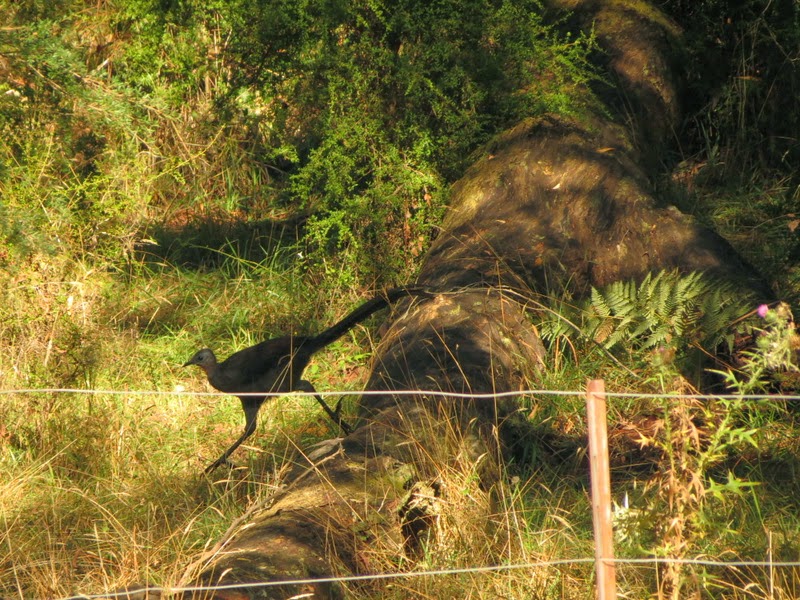
Further up the track we saw a flash of orange fly past and was able to locate a Rufous Fantail. I managed to get this one shot before it quickly darted off.

Rufous Fantail, Rhipidura rufifrons
This was a new spotting for me and I'm keen to go back and spend more time chasing it for a clearer photo.

Another highlight was getting up close to these beautiful King Parrots and Crimson Rosellas. 

Australian King Parrot, Alisterus scapularis


Crimson Rosella, Platycercus elegans

I think I'll take a deck chair next time so I can outlast the Whipbird in it's hide and seek game!

Rufous Fantail - tick #212